
Aboveground vs underground rainwater cisterns
Compare footprint, excavation, access and product-specific structural requirements before deciding where to store roof water.
When buried storage makes sense
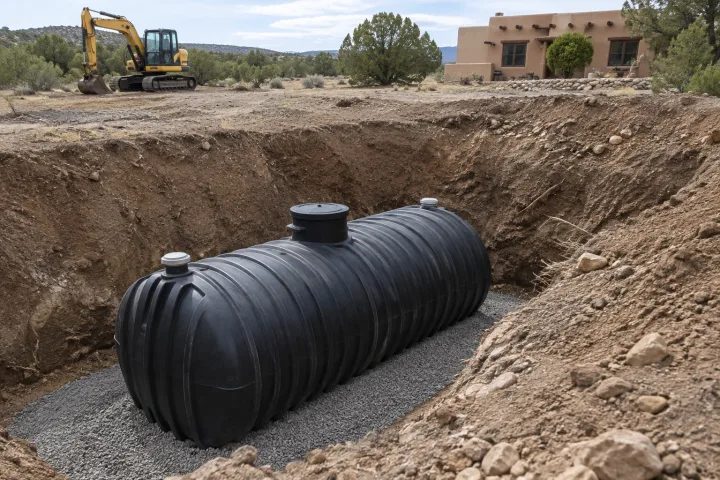
A buried tank may free up landscape space and help accommodate a qualifying County project. Excavation, delivery, suitable bedding, access, soil loading and groundwater conditions can make installation more complex. Insulation and freeze protection must be designed for the actual system.
When aboveground storage makes sense
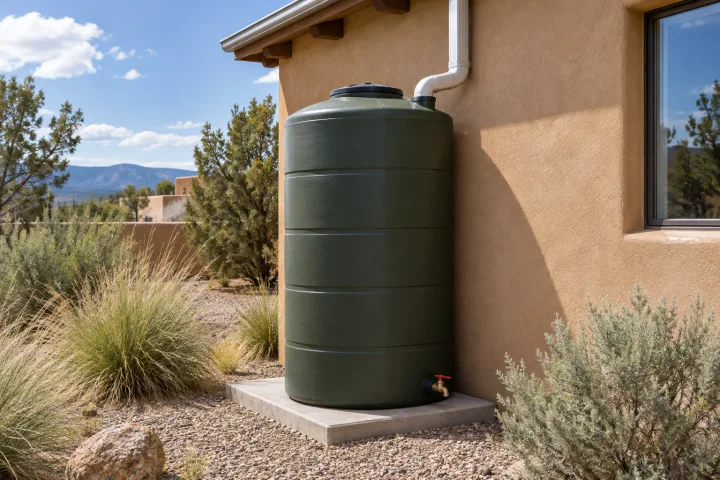
An aboveground system can be easier to inspect and may avoid extensive excavation. It occupies visible space, and exposed fittings and pumps need site-specific freeze protection. It may not meet the applicable County provision for a qualifying larger project.
Compare materials and ratings
Ask for written confirmation that the exact tank is rated for the proposed loading, burial and access arrangement. Compare usable capacity, delivery, maintenance access, warranty, and replacement options rather than material alone.
Decide with a professional
Use the County requirements guide, cost worksheet and an installer’s site review before ordering.
Estimate roof yield · Compare cost factors · Review County rules
Get a Cistern Installation Quote